How to Clean Porcelain Countertops: 9 Expert Tips for a Spotless Shine
Key Takeaways
- Porcelain countertops are highly durable, non-porous, and resistant to stains, but they still require proper cleaning and maintenance.
- Daily cleaning typically requires only warm water, mild dish soap, and a soft microfiber cloth.
- Avoid abrasive scrubbers, harsh chemicals, and cleaners that may damage the surface finish.
- Regular maintenance helps preserve the countertop’s appearance and prevents buildup from becoming difficult to remove.
- Most porcelain countertops do not require sealing due to their non-porous nature.
- Quick cleanup of spills helps maintain a spotless appearance and reduces the chance of stubborn stains.
What Is the Best Way to Clean Porcelain Countertops?
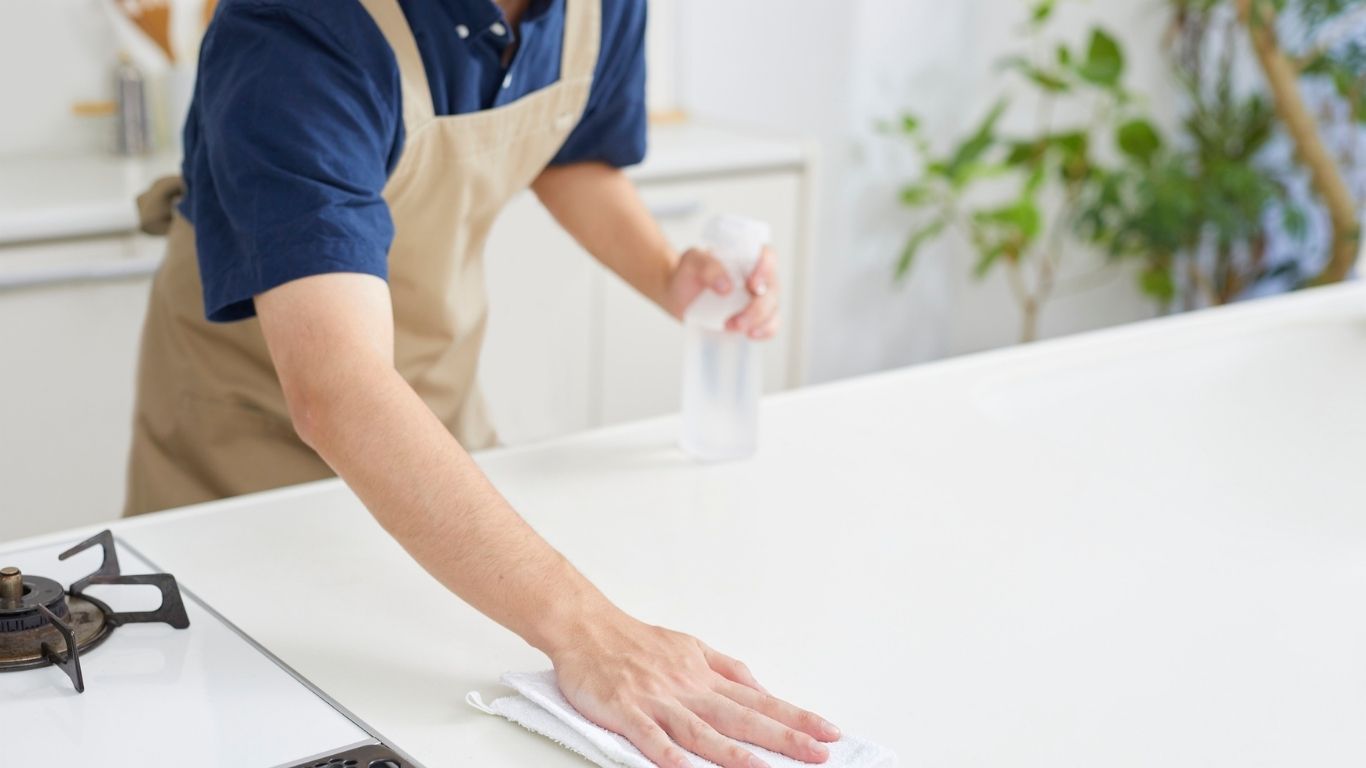
The best way to clean porcelain countertops is to wipe them daily with a soft microfiber cloth, warm water, and a mild dish soap solution. For deeper cleaning, use a non-abrasive cleaner designed for stone or porcelain surfaces. Avoid harsh chemicals, steel wool, and abrasive pads. Regular cleaning helps maintain the countertop’s shine, prevents stains, and keeps the surface looking like new.
Introduction: How to Clean Porcelain Countertops Without Damaging Their Beauty
I still remember the first time I saw porcelain countertops in a modern kitchen showroom.
They looked almost too perfect.
The surface was sleek, elegant, and practically glowing under the lights.
My first thought was:
“These must be incredibly difficult to maintain.”
I couldn’t have been more wrong.
One of the reasons porcelain countertops have become so popular in American homes is because they’re surprisingly easy to clean and maintain.
But here’s the catch:
Easy maintenance doesn’t mean no maintenance.
Over the years, I’ve seen homeowners accidentally dull finishes, create streaks, or use cleaning products that weren’t necessary simply because they treated porcelain like granite, marble, or quartz.
The good news?
Porcelain is one of the most forgiving countertop materials available.
With a few simple habits and the right cleaning techniques, you can keep your countertops looking just as impressive as the day they were installed.
Let’s start by understanding what makes porcelain unique.
Understanding Porcelain Countertops Before You Clean
Before you reach for a cleaning product, it’s important to understand the material you’re working with.
Knowing how porcelain is made helps explain why it performs so well in kitchens and bathrooms.
What Are Porcelain Countertops Made Of?
Porcelain countertops are manufactured using:
- Refined clay
- Natural minerals
- High heat
- Extreme pressure
The material is fired at very high temperatures, creating a dense and durable surface.
The result is a countertop that is:
- Strong
- Heat resistant
- Stain resistant
- Water resistant
This manufacturing process is one reason porcelain performs so well compared to many traditional countertop materials.
Why Homeowners Love Porcelain Countertops
Porcelain offers several advantages.
Low Maintenance
Unlike some natural stone surfaces, porcelain requires minimal upkeep.
Stain Resistance
Its non-porous surface makes it difficult for liquids to penetrate.
Heat Resistance
Hot cookware generally poses less risk compared to some countertop materials.
Modern Appearance
Porcelain can mimic:
- Marble
- Concrete
- Granite
- Natural stone
while requiring less maintenance.
Are Porcelain Countertops Stain Resistant?
Yes.
But not completely stain-proof.
This is an important distinction.
Porcelain’s non-porous surface resists:
- Coffee spills
- Wine stains
- Oils
- Food residue
much better than many porous materials.
However, allowing spills to sit for extended periods can still create cleaning challenges.
That’s why routine cleaning matters.
Porcelain vs Quartz vs Granite: Cleaning Differences
Many homeowners switch to porcelain after owning granite or quartz.
The cleaning requirements differ slightly.
| Feature | Porcelain | Quartz | Granite |
|---|---|---|---|
| Non-Porous | Yes | Yes | Usually No |
| Requires Sealing | No | No | Often Yes |
| Stain Resistance | Excellent | Excellent | Good |
| Daily Maintenance | Easy | Easy | Moderate |
| Heat Resistance | Excellent | Moderate | Excellent |
This table helps explain why porcelain has become increasingly popular among homeowners looking for a low-maintenance option.
Benefits of Keeping Porcelain Countertops Clean
Cleaning isn’t just about appearance.
Proper maintenance protects your investment and helps preserve the countertop’s performance.
Preserving the Original Beauty
Porcelain is known for its elegant appearance.
Regular cleaning helps maintain:
- Color consistency
- Surface clarity
- Shine
- Visual appeal
Neglecting maintenance can lead to buildup that masks the countertop’s natural beauty.
Extending the Life of the Surface
While porcelain is extremely durable, proper care helps prevent:
- Surface dullness
- Residue buildup
- Unnecessary wear
Think of cleaning as preventive maintenance.
A few minutes each day can save hours of scrubbing later.
Creating a More Hygienic Kitchen
One of porcelain’s biggest advantages is its non-porous surface.
Because moisture doesn’t easily penetrate, bacteria and contaminants have fewer places to hide.
Regular cleaning helps maintain a healthier environment for:
- Food preparation
- Family meals
- Everyday kitchen use
Preventing Stubborn Stains
Most difficult stains start as easy stains.
Coffee, wine, grease, and sauces are far easier to remove immediately than after they’ve dried.
I’ve learned this lesson personally after leaving a coffee mug ring overnight.
The stain came out eventually.
But it took far more effort than a simple wipe would have required.
Essential Supplies for Cleaning Porcelain Countertops
One of my favorite things about porcelain countertops is that you don’t need a cabinet full of specialty products.
In fact, simple is often better.
Everyday Cleaning Tools You’ll Need
A few basic supplies can handle most cleaning tasks.
Microfiber Cloths
These are my go-to choice.
Benefits include:
- Soft surface
- Excellent absorption
- Minimal streaking
- Safe for daily use
Soft Sponges
Non-abrasive sponges work well for routine cleaning.
Spray Bottle
Helpful for applying cleaning solutions evenly.
Warm Water
Sometimes this is all you need.
Seriously.
Safe Cleaning Products for Porcelain
The safest cleaners are often the simplest.
Recommended options include:
- Mild dish soap
- pH-neutral stone cleaners
- Porcelain-safe surface cleaners
Always check manufacturer recommendations if available.
Natural Cleaning Solutions That Work
Many homeowners prefer natural alternatives.
Popular options include:
Warm Water and Dish Soap
The gold standard for everyday cleaning.
Baking Soda Paste
Helpful for certain stubborn stains.
Diluted Mild Cleaners
Gentle cleaning solutions often perform surprisingly well.
We’ll discuss natural cleaning methods in more detail later in this guide.
Products and Tools to Avoid
Not every cleaner belongs on porcelain.
Avoid:
Steel Wool
Can damage finishes.
Abrasive Scrub Pads
May scratch certain surface finishes.
Harsh Chemical Products
Some cleaners are unnecessarily aggressive.
Sharp Scraping Tools
These can create damage if used improperly.
Quick Supply Checklist
Here’s a simple cleaning kit for most homeowners.
| Item | Purpose |
|---|---|
| Microfiber Cloth | Daily wiping |
| Soft Sponge | Routine cleaning |
| Mild Dish Soap | Everyday cleaner |
| Spray Bottle | Easy application |
| Warm Water | Basic cleaning |
| Baking Soda | Stubborn stain removal |
Most households already have everything on this list.
The Secret to Easy Porcelain Maintenance
Here’s something many homeowners overcomplicate:
Porcelain doesn’t usually need aggressive cleaning.
In fact, the best maintenance strategy is often:
Clean Frequently
A quick wipe prevents buildup.
Use Gentle Products
Avoid unnecessary chemicals.
Address Spills Promptly
Fresh stains are easier to remove.
Follow Manufacturer Guidance
When available, always review care recommendations.
Simple habits consistently outperform heavy-duty cleaning sessions.
Daily Cleaning, Deep Cleaning, and Stain Removal
Now that you understand what makes porcelain countertops unique, let’s get into the practical side of things.
This is where most homeowners either make life very easy for themselves—or unintentionally create more work.
The good news?
Porcelain is one of the most forgiving countertop materials you’ll ever own.
In my experience, the people who struggle with porcelain countertops usually fall into one of two categories:
- They never clean them.
- They over-clean them with products that aren’t necessary.
The sweet spot is somewhere in the middle.
Let’s start with the easiest routine of all.
How to Clean Porcelain Countertops Daily
Daily cleaning shouldn’t feel like a chore.
In fact, it should take less time than brewing your morning coffee.
Why Daily Cleaning Matters
Even though porcelain resists stains and moisture, daily use leaves behind:
- Dust
- Crumbs
- Fingerprints
- Food residue
- Water spots
A quick daily wipe prevents buildup from becoming a larger problem later.
The Perfect 3-Minute Daily Cleaning Routine
Here’s the routine I recommend to most homeowners.
Step 1: Remove Loose Debris
Use a soft cloth or dry microfiber towel.
Remove:
- Crumbs
- Dust
- Food particles
This prevents scratching during wiping.
Step 2: Apply Mild Soap Solution
Mix:
- Warm water
- A few drops of dish soap
Dampen a microfiber cloth.
Avoid soaking the surface.
Step 3: Wipe the Entire Countertop
Use smooth circular motions.
Pay extra attention to:
- Food prep areas
- Around sinks
- Frequently touched areas
Step 4: Rinse With Clean Water
A second damp cloth removes soap residue.
Step 5: Dry Completely
Use a dry microfiber towel.
This simple step dramatically reduces streaks and water spots.
Daily Cleaning Do’s and Don’ts
Do
- Use soft cloths
- Clean spills quickly
- Dry after cleaning
Don’t
- Use abrasive scrubbers
- Let residue accumulate
- Use harsh chemicals unnecessarily
Weekly Deep Cleaning for a Lasting Shine
Daily cleaning handles surface dirt.
Weekly cleaning restores that “just installed” look.
Think of it as a reset button for your countertops.
Why Weekly Cleaning Makes a Difference
Over time, invisible layers of:
- Grease
- Soap residue
- Cooking oils
- Hard water deposits
can accumulate.
Even if the countertop looks clean.
Weekly maintenance removes this buildup.
Step-by-Step Deep Cleaning Process
Step 1: Clear the Countertop
Remove:
- Appliances
- Decorative items
- Storage containers
This gives you access to every inch of the surface.
Step 2: Apply a Porcelain-Safe Cleaner
Choose:
- pH-neutral cleaner
- Mild dish soap solution
Spray evenly across the countertop.
Step 3: Let It Sit Briefly
Allow the cleaner to work for a few minutes.
This helps loosen residue.
Step 4: Wipe Thoroughly
Use a microfiber cloth.
Work in sections.
Step 5: Focus on Problem Areas
Pay extra attention to:
- Sink edges
- Backsplashes
- Counter seams
- Appliance zones
These areas collect more buildup.
Step 6: Rinse and Dry
Finish with:
- Clean water
- Dry microfiber cloth
This step creates a streak-free finish.
Deep Cleaning Checklist
| Task | Frequency |
|---|---|
| Daily Wipe Down | Every day |
| Deep Cleaning | Weekly |
| Hard Water Inspection | Monthly |
| Full Surface Inspection | Quarterly |
How to Remove Common Stains From Porcelain Countertops
Porcelain resists stains exceptionally well.
But life happens.
Coffee spills.
Wine accidents.
Cooking mishaps.
Let’s tackle the most common offenders.
Coffee and Tea Stains
As someone who practically runs on coffee, this one hits close to home.
How to Remove Coffee Stains
- Wipe excess liquid.
- Apply warm soapy water.
- Allow it to sit briefly.
- Wipe clean.
Most fresh stains disappear immediately.
For Older Coffee Stains
Use:
- Mild cleaner
- Soft sponge
Avoid aggressive scrubbing.
Wine Stains
Red wine seems determined to stain everything.
Fortunately, porcelain fights back.
Removal Steps
- Blot immediately.
- Apply mild dish soap solution.
- Wipe gently.
- Rinse thoroughly.
The sooner you act, the easier removal becomes.
Grease and Oil Residue
Kitchens naturally accumulate grease.
Especially near:
- Cooktops
- Air fryers
- Ranges
Best Removal Method
Use:
- Warm water
- Degreasing dish soap
Allow the solution to sit briefly before wiping.
Food Coloring Stains
Food coloring can look dramatic.
Thankfully, porcelain’s non-porous surface usually prevents permanent staining.
Recommended Approach
- Clean immediately.
- Use mild cleaner.
- Repeat if necessary.
Patience often works better than aggressive scrubbing.
Ink and Marker Stains
If you have children, this section may become useful someday.
Trust me.
Removal Method
Use:
- Mild surface cleaner
- Soft cloth
Always test unfamiliar cleaning products first.
Water Spots and Mineral Deposits
These are especially common near sinks.
They don’t stain the porcelain itself.
They simply sit on top of the surface.
We’ll cover hard water deposits in greater detail later.
How to Remove Tough Stains Without Damaging Porcelain
Occasionally you’ll encounter a stain that refuses to leave quietly.
The key is increasing cleaning power without increasing damage risk.
Start With the Least Aggressive Option
Always begin gently.
Many homeowners skip directly to harsh chemicals.
That’s usually unnecessary.
First Try
- Warm water
- Dish soap
- Microfiber cloth
You’d be surprised how often this works.
Use Baking Soda Paste
Baking soda remains one of my favorite stain-fighting tools.
How to Make a Paste
Mix:
- Baking soda
- Small amount of water
Create a thick paste.
Application Steps
- Apply to stain.
- Let sit briefly.
- Wipe gently.
- Rinse thoroughly.
Because baking soda is mildly abrasive, use light pressure.
Safe Commercial Cleaners
If baking soda isn’t enough, consider cleaners specifically labeled for:
- Porcelain
- Stone surfaces
- Non-abrasive countertop cleaning
Always follow manufacturer instructions.
Gentle Scrubbing Techniques
The goal is helping the cleaner—not overpowering the stain with force.
Use:
- Soft microfiber cloth
- Non-abrasive sponge
Avoid:
- Steel wool
- Scouring pads
- Wire brushes
These tools can create unnecessary damage.
When to Repeat the Process
Some stains require multiple treatments.
That’s normal.
It’s better to:
- Clean gently three times
than:
- Damage the surface once
Patience usually wins.
A Quick Stain Removal Reference Table
| Stain Type | Best Solution |
|---|---|
| Coffee | Warm water and dish soap |
| Tea | Mild surface cleaner |
| Wine | Immediate soap cleaning |
| Grease | Degreasing dish soap |
| Food Coloring | Mild cleaner and patience |
| Ink | Porcelain-safe cleaner |
| Water Spots | Hard water treatment |
The Biggest Stain Removal Mistake Homeowners Make
Here’s something I’ve noticed repeatedly.
People panic.
A stain appears.
Out comes:
- Steel wool
- Harsh chemicals
- Aggressive scrubbing
Porcelain rarely requires that level of force.
In fact, over-cleaning often creates more problems than the stain itself.
Slow down.
Start gentle.
Increase cleaning strength only when necessary.
Safe Disinfection, Natural Cleaning Methods, and Caring for Different Porcelain Finishes
By now, your porcelain countertops should be looking pretty good.
But clean and disinfected are not always the same thing.
That’s an important distinction, especially in busy kitchens where raw meat, fresh produce, and everyday spills are part of life.
I’ve met homeowners who disinfect every surface twice a day.
I’ve also met homeowners who think a quick wipe with a damp sponge counts as sanitizing.
The truth is somewhere in the middle.
Let’s talk about how to safely disinfect porcelain countertops without damaging the surface you’ve worked so hard to maintain.
How to Disinfect Porcelain Countertops Safely
Cleaning removes dirt and residue.
Disinfecting reduces bacteria and germs.
Both have their place.
When Should You Disinfect?
For most households, disinfection is most useful after:
- Preparing raw meat
- Handling seafood
- Cleaning up pet messes
- Someone in the household is sick
- Food spills involving high-risk ingredients
For ordinary daily use, regular cleaning is often sufficient.
Safe Disinfecting Products
Porcelain is durable, but it’s still wise to use products carefully.
Generally safe options include:
- Manufacturer-approved disinfectants
- Mild household disinfecting sprays
- Alcohol-based surface disinfectants designed for hard surfaces
Always check the product label and your countertop manufacturer’s care instructions.
Proper Disinfection Process
Step 1: Clean First
Never disinfect a dirty surface.
Remove:
- Food debris
- Grease
- Dust
Disinfectants work better on clean surfaces.
Step 2: Apply the Product
Follow manufacturer directions.
Avoid oversaturating the countertop.
Step 3: Allow Proper Contact Time
This is the step many people skip.
Most disinfectants need time to work.
Wiping immediately may reduce effectiveness.
Check the label for recommended contact time.
Step 4: Rinse if Necessary
Some products require rinsing after disinfection.
Others do not.
Always follow instructions.
Avoid Overusing Strong Chemicals
More isn’t always better.
Excessive chemical use can:
- Leave residue
- Create streaking
- Dull certain finishes over time
A measured approach is best.
Natural Cleaning Methods for Porcelain Countertops
Many homeowners prefer natural solutions whenever possible.
I understand the appeal.
Simple ingredients can often handle everyday cleaning surprisingly well.
Warm Water and Dish Soap
If I had to choose only one cleaning method, this would be it.
It’s:
- Affordable
- Safe
- Effective
Most daily cleaning tasks can be handled with this simple combination.
Baking Soda Paste
We touched on this earlier, but it’s worth revisiting.
Best Uses
- Dried food residue
- Light stains
- Sticky spots
How to Use It
- Mix baking soda with water.
- Apply gently.
- Let sit briefly.
- Wipe away.
Keep pressure light.
Can You Use Vinegar on Porcelain Countertops?
This is one of the most common questions homeowners ask.
The Short Answer
Usually, yes—but with caution.
Porcelain itself generally tolerates diluted vinegar well.
However:
- Manufacturer recommendations vary.
- Grout lines may be affected.
- Adjacent materials could react differently.
If you choose to use vinegar:
- Dilute it
- Use it occasionally
- Avoid excessive use
When in doubt, stick with dish soap and water.
Lemon-Based Cleaning Solutions
Lemon can help with:
- Mild grease
- Odors
- Surface freshness
However, natural doesn’t automatically mean better.
Use moderation.
And always rinse thoroughly afterward.
Eco-Friendly Cleaning Alternatives
Many environmentally friendly cleaners work well on porcelain.
Look for:
- Non-abrasive formulas
- pH-neutral cleaners
- Porcelain-safe labeling
Cleaning Different Finishes of Porcelain Countertops
Not all porcelain countertops look the same.
Different finishes require slightly different care.
Understanding your finish helps preserve its appearance.
Polished Porcelain Countertops
Polished surfaces have a glossy, reflective appearance.
They’re often the most dramatic visually.
Cleaning Tips
- Use microfiber cloths
- Dry thoroughly
- Avoid abrasive products
Common Issue
Water spots tend to show more easily.
A quick dry wipe helps prevent streaking.
Matte Porcelain Countertops
Matte finishes have become increasingly popular.
They offer a softer, modern appearance.
Cleaning Tips
- Remove residue promptly
- Use pH-neutral cleaners
- Avoid wax-based products
Common Issue
Grease can sometimes be more visible on matte surfaces.
Routine wiping helps.
Textured Porcelain Countertops
Some porcelain designs mimic natural stone textures.
These surfaces can be beautiful but may require extra attention.
Cleaning Tips
- Use soft brushes when needed
- Pay attention to textured areas
- Remove debris from grooves
Common Issue
Dust and residue can collect in textured patterns.
Regular maintenance prevents buildup.
Quick Finish Comparison Table
| Finish Type | Cleaning Difficulty | Most Common Issue |
|---|---|---|
| Polished | Easy | Water spots |
| Matte | Easy | Grease visibility |
| Textured | Moderate | Debris buildup |
How to Handle Everyday Kitchen Messes
Let’s talk about reality.
Most countertop damage doesn’t come from major accidents.
It comes from daily life.
Small spills.
Sticky residue.
Cooking messes.
These are the things you’ll encounter most often.
Cleaning Food Spills Immediately
This is the easiest maintenance habit you can develop.
Examples include:
- Sauce splatters
- Juice spills
- Coffee drips
- Cooking oils
Fresh spills are usually simple to remove.
Dried spills require more effort.
Dealing With Sticky Residue
Sticky messes often come from:
- Syrup
- Honey
- Juice concentrates
- Candy
Best Method
- Use warm water.
- Apply mild soap.
- Allow a few minutes of soaking.
- Wipe gently.
Avoid scraping aggressively.
Removing Dried-On Food
We’ve all been there.
You notice yesterday’s pasta sauce today.
Safe Removal Method
- Place a damp cloth over the residue.
- Let moisture soften it.
- Wipe gently.
Patience is far safer than force.
Cleaning Around Sinks
Sink areas experience:
- Water splashes
- Soap residue
- Mineral buildup
Make a habit of wiping these areas daily.
A few seconds can prevent larger cleaning projects later.
Managing Cooking Grease
Grease is one of the most common kitchen contaminants.
Fortunately, porcelain handles it well.
Use:
- Warm water
- Mild degreasing dish soap
- Soft microfiber cloth
Simple works.
The Best Porcelain Cleaning Habit You Can Build
If I could recommend just one habit to homeowners, it would be this:
Don’t Wait
Clean small messes while they’re still small.
That’s the secret.
Not expensive products.
Not complicated techniques.
Just consistency.
Five minutes today can save thirty minutes next weekend.
Hard Water Stains, Surface Protection, Sealing, and Long-Term Maintenance
At this point, you know how to clean, disinfect, and maintain porcelain countertops on a daily basis.
Now let’s focus on the issues that tend to appear over the long term.
These are the questions homeowners usually ask after they’ve lived with porcelain countertops for a few months or years:
- Why do I see white spots near the sink?
- Do porcelain countertops need sealing?
- Can they scratch?
- How do I keep them looking brand new?
The good news is that porcelain is one of the lowest-maintenance countertop materials available.
But even low-maintenance surfaces benefit from smart care habits.
How to Remove Hard Water Stains and Mineral Buildup
If your home has hard water, you’ve probably seen those annoying cloudy white spots around faucets and sinks.
The first time I noticed them on a client’s beautiful porcelain countertop, I thought the surface had somehow become damaged.
Fortunately, it hadn’t.
The problem was simply mineral buildup.
What Causes Hard Water Stains?
Hard water contains minerals such as:
- Calcium
- Magnesium
- Lime
When water evaporates, these minerals remain behind.
Over time, they create:
- White spots
- Cloudy residue
- Chalky deposits
The countertop itself isn’t stained.
The minerals are sitting on top of the surface.
How to Remove Hard Water Deposits
Step 1: Clean the Area Normally
Use:
- Warm water
- Mild dish soap
Remove any grease or dirt first.
Step 2: Apply a Mild Cleaning Solution
A porcelain-safe cleaner often works well.
Follow manufacturer recommendations whenever possible.
Step 3: Wipe With a Soft Microfiber Cloth
Use gentle pressure.
Avoid aggressive scrubbing.
Step 4: Dry Completely
This is the step most homeowners skip.
Drying prevents new water spots from forming.
Preventing Future Water Spots
The easiest solution is prevention.
After using the sink:
- Wipe standing water
- Dry around faucets
- Remove splashes promptly
A few seconds of effort can prevent future buildup.
What Not to Use on Porcelain Countertops
Sometimes knowing what not to do is just as valuable as knowing what to do.
I’ve seen homeowners accidentally create problems by using products that were simply too aggressive.
Let’s avoid that.
Abrasive Scrub Pads
Avoid:
- Steel wool
- Metal scrubbing pads
- Heavy-duty scouring pads
These tools may damage certain finishes.
Especially polished surfaces.
Harsh Chemical Cleaners
Strong chemicals are rarely necessary.
Examples to avoid unless specifically approved include:
- Industrial degreasers
- Highly acidic cleaners
- Harsh solvent-based products
Porcelain is durable, but there’s no reason to take unnecessary risks.
Sharp Scrapers and Blades
Some people reach for razor blades when dealing with dried residue.
This can be dangerous.
A slip can create:
- Scratches
- Chips
- Edge damage
A damp cloth and patience are usually safer.
Wax-Based Products
Porcelain doesn’t require waxing.
Wax may create:
- Streaks
- Residue
- Dullness
Skip it.
The “More Is Better” Cleaning Mistake
One of the most common errors is using excessive amounts of cleaner.
More product often creates:
- Residue
- Smearing
- Extra work
Simple cleaning solutions usually perform best.
Do Porcelain Countertops Need Sealing?
This is probably one of the most frequently asked questions.
The answer is refreshingly simple.
The Short Answer
In most cases:
No.
Porcelain countertops generally do not require sealing.
Why Porcelain Doesn’t Need Sealing
Unlike many natural stones, porcelain is:
- Non-porous
- Dense
- Water resistant
Liquids typically remain on the surface rather than penetrating the material.
That’s one reason porcelain is so easy to maintain.
Why People Get Confused
Many homeowners previously owned:
- Granite
- Marble
- Natural stone
Those materials often require periodic sealing.
It’s easy to assume porcelain works the same way.
It doesn’t.
Always Check Manufacturer Recommendations
While most porcelain countertops do not require sealing, always review:
- Product documentation
- Installation guidelines
- Manufacturer care instructions
When in doubt, follow the manufacturer’s guidance.
How to Prevent Scratches, Chips, and Damage
Porcelain is tough.
Very tough.
But no countertop material is completely indestructible.
Use Cutting Boards
Technically, porcelain can handle a lot.
However, cutting boards still make sense.
Benefits include:
- Protecting knives
- Protecting edges
- Reducing wear
It’s a simple habit worth keeping.
Protect Countertop Edges
Most countertop damage occurs at the edges.
Why?
Because edges absorb impact.
Avoid:
- Dropping heavy cookware
- Hitting corners with appliances
- Slamming heavy objects
A little awareness goes a long way.
Be Careful With Heavy Kitchen Equipment
Examples include:
- Stand mixers
- Air fryers
- Pressure cookers
These appliances aren’t usually a problem.
Just avoid dragging them across the surface.
Lift instead of slide.
Your countertop will thank you.
Protect Against Impact
Porcelain resists:
- Heat
- Stains
- Moisture
Impact is its biggest vulnerability.
A dropped cast-iron skillet can damage almost any countertop material.
Use reasonable care.
Seasonal Maintenance Tips for Porcelain Countertops
Most homeowners don’t think about countertop maintenance seasonally.
But it’s actually a helpful approach.
Spring Cleaning Checklist
Spring is a great time to:
- Deep clean countertops
- Inspect edges
- Check seams
- Remove hidden buildup
Think of it as a yearly reset.
Summer Maintenance
Summer often means:
- Outdoor gatherings
- More food preparation
- More countertop usage
Pay extra attention to:
- Beverage spills
- Food stains
- Sink areas
Holiday Cooking Season Protection
The holidays can be rough on kitchens.
Trust me.
I’ve seen countertops covered with:
- Baking ingredients
- Roasting pans
- Endless dishes
Before holiday cooking begins:
- Clear clutter
- Prepare cleaning supplies
- Use trivets when appropriate
Annual Countertop Inspection
At least once per year, inspect:
- Edges
- Corners
- Seams
- Sink areas
You’re not looking for problems.
You’re simply verifying everything remains in excellent condition.
Long-Term Porcelain Countertop Care Habits
If your goal is keeping porcelain countertops beautiful for 10–20 years or more, focus on habits.
Not products.
The best habits include:
Daily
- Wipe spills
- Remove crumbs
- Dry wet areas
Weekly
- Deep clean
- Inspect high-use areas
Monthly
- Check for hard water buildup
- Clean around fixtures
Annually
- Perform a complete inspection
- Review manufacturer recommendations
Consistency beats intensity every time.
The Biggest Myth About Porcelain Countertops
Here’s a myth I hear regularly:
“Porcelain countertops are maintenance-free.”
Not exactly.
They’re low maintenance.
That’s different.
Every countertop benefits from:
- Routine cleaning
- Prompt spill removal
- Basic care
Fortunately, porcelain requires far less effort than many alternatives.
Common Mistakes, Maintenance Schedule, FAQs, and Final Thoughts
You’ve made it to the final part of this guide.
By now, you know:
- How porcelain countertops are made
- Which cleaning products are safe
- How to remove stains
- How to disinfect surfaces
- How to prevent scratches and damage
- Why porcelain usually doesn’t require sealing
Now let’s focus on the final details that help homeowners keep porcelain countertops looking beautiful for years.
Sometimes the biggest improvements come from avoiding simple mistakes.
Porcelain Countertop Cleaning Mistakes to Avoid
Most countertop damage doesn’t happen because porcelain is weak.
It happens because homeowners unknowingly use the wrong products or habits.
Let’s prevent that.
Using Abrasive Cleaning Tools
This is probably the most common mistake.
Avoid:
- Steel wool
- Wire brushes
- Heavy-duty scouring pads
Even though porcelain is durable, aggressive tools can affect the finish, especially on polished surfaces.
Better Alternative
Use:
- Microfiber cloths
- Soft sponges
- Non-abrasive pads
These provide plenty of cleaning power without unnecessary risk.
Letting Spills Sit Too Long
Porcelain resists stains extremely well.
But that doesn’t mean spills should become permanent decorations.
Common offenders include:
- Coffee
- Wine
- Tomato sauce
- Cooking oils
The sooner you clean a spill, the easier cleanup becomes.
Using Too Much Cleaner
Many people assume more cleaner equals better cleaning.
Not necessarily.
Excess product can leave:
- Streaks
- Residue
- Haze
A small amount often works best.
Ignoring Manufacturer Guidelines
Every countertop product is slightly different.
When available, always review:
- Care instructions
- Warranty guidelines
- Manufacturer recommendations
Those documents exist for a reason.
Dragging Heavy Objects Across the Surface
I’ve seen people slide:
- Microwaves
- Mixers
- Coffee makers
across beautiful countertops.
It’s an easy habit to break.
Lift instead of drag whenever possible.
Professional Cleaning vs DIY Cleaning
One question homeowners occasionally ask is:
“Do I need professional countertop cleaning?”
For most people, the answer is no.
Porcelain is designed to be homeowner-friendly.
When DIY Cleaning Is Enough
Most households can handle maintenance themselves.
Daily and weekly care typically covers:
- Dirt
- Grease
- Food residue
- Water spots
- Minor stains
No professional service required.
When Professional Help May Be Useful
Professional assistance may be worth considering if:
- Installation damage occurs
- Chips require repair
- Surface restoration is needed
- Manufacturer-recommended maintenance is required
These situations are relatively uncommon.
Cost Considerations
Routine professional cleaning generally isn’t necessary for porcelain.
That’s one of the material’s biggest advantages.
Compared to some natural stones, maintenance costs are often lower over time.
Porcelain Countertop Care Schedule
One of the easiest ways to keep countertops looking new is to follow a simple maintenance schedule.
Nothing complicated.
Just consistent.
Daily Maintenance Checklist
Do This Every Day
- Wipe down surfaces
- Remove crumbs
- Clean spills immediately
- Dry sink areas
Estimated time:
2–5 minutes
Weekly Maintenance Checklist
Once Per Week
- Perform a deeper cleaning
- Clean corners and edges
- Remove grease buildup
- Check around faucets
Estimated time:
10–15 minutes
Monthly Maintenance Checklist
Once Per Month
- Inspect for hard water buildup
- Clean around fixtures thoroughly
- Check countertop edges
Estimated time:
15–20 minutes
Annual Maintenance Checklist
Once Per Year
- Perform a complete inspection
- Review manufacturer care recommendations
- Address any minor issues
Estimated time:
30–60 minutes
Quick Reference Cleaning Guide
Here’s a simple chart you can save for future reference.
| Problem | Best Solution |
|---|---|
| Daily Dirt | Warm water and dish soap |
| Fingerprints | Microfiber cloth |
| Grease | Mild degreasing dish soap |
| Coffee Stains | Soap and warm water |
| Wine Stains | Immediate cleanup |
| Food Residue | Warm water soak |
| Water Spots | Dry microfiber cloth |
| Hard Water Deposits | Porcelain-safe cleaner |
| Sanitizing | Approved disinfectant |
Best Products for Porcelain Countertops
While specific product recommendations can vary, look for cleaners that are:
Safe
- Non-abrasive
- pH-neutral
Effective
- Designed for porcelain
- Designed for stone surfaces
Easy to Use
- Spray application
- Residue-free formulas
Remember:
The best cleaner is often the one you’ll actually use consistently.
Frequently Asked Questions
For daily cleaning, warm water and mild dish soap are often all that’s needed. For deeper cleaning, use a non-abrasive, porcelain-safe cleaner.
In many cases, diluted vinegar can be used occasionally. However, always check manufacturer recommendations and avoid excessive use.
No.
Porcelain is highly stain-resistant because of its non-porous surface. Prompt cleanup makes stain prevention even easier.
Most households benefit from a thorough cleaning once per week.
Porcelain is highly scratch-resistant, but dragging heavy objects or using abrasive tools can still cause damage.
Most porcelain countertops do not require sealing because the material is naturally non-porous.
Start with warm water and mild soap. For stubborn stains, try a baking soda paste or a porcelain-safe cleaner before using stronger solutions.
Porcelain is highly heat-resistant. However, using trivets is still a good practice to protect both the countertop and surrounding materials.
Summary
Porcelain countertops have earned their reputation as one of the easiest countertop surfaces to maintain.
The key points to remember are simple:
Use Gentle Cleaning Products
Most cleaning jobs require nothing more than:
- Warm water
- Mild dish soap
- Microfiber cloth
Clean Spills Quickly
Fresh spills are easy to remove.
Old spills require more effort.
Avoid Abrasive Tools
Skip:
- Steel wool
- Harsh scrubbers
- Aggressive chemicals
Follow a Simple Maintenance Routine
A few minutes each day can preserve your countertop’s appearance for years.
Protect the Surface
Use:
- Cutting boards
- Careful handling
- Routine inspections
Small habits create long-term results.
Final Thoughts
One of the reasons I recommend porcelain countertops so often is because they strike a rare balance.
They’re:
- Beautiful
- Durable
- Heat-resistant
- Stain-resistant
- Low maintenance
And perhaps most importantly for busy homeowners:
They’re forgiving.
You don’t need specialized equipment.
You don’t need expensive treatments.
You don’t need to spend every weekend maintaining them.
Instead, focus on consistency.
A simple cleaning routine, prompt spill removal, and a little common sense will keep your porcelain countertops looking fantastic for many years.
That’s about as close to a homeowner-friendly countertop as it gets.
Disclaimer
This article is intended for educational and informational purposes only. Always follow the specific care and maintenance instructions provided by your countertop manufacturer. Cleaning products, finishes, and installation methods can vary. Test any new cleaner in an inconspicuous area before applying it to the entire surface.