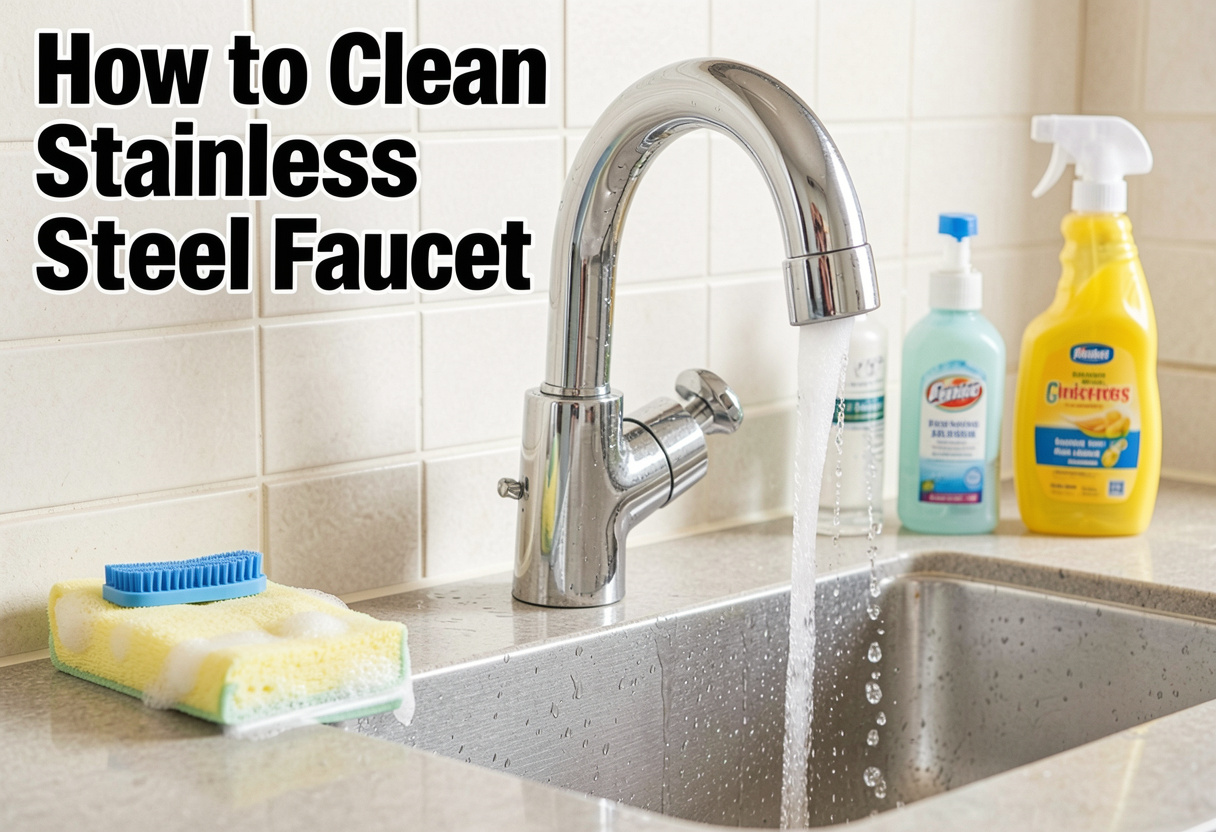
How to Clean Stainless Steel Faucet: 11 Powerful Tips for a Spotless Shine
Key Takeaways
- Clean stainless steel faucets regularly with warm water, mild dish soap, and a microfiber cloth.
- Always wipe in the direction of the stainless steel grain to avoid streaks and scratches.
- White vinegar is highly effective for removing hard water spots and mineral deposits.
- Avoid abrasive pads, steel wool, and harsh chemicals that can damage the finish.
- Drying the faucet after cleaning helps prevent water spots and keeps it shiny longer.
- Regular maintenance takes only a few minutes and can keep a faucet looking new for years.
How Do You Clean a Stainless Steel Faucet?
To clean a stainless steel faucet, wipe it with a soft microfiber cloth dipped in warm water and mild dish soap. Rinse thoroughly and dry immediately to prevent water spots. For stubborn mineral deposits or hard water stains, apply white vinegar, let it sit for a few minutes, then wipe clean. Always clean in the direction of the steel grain and avoid abrasive cleaners that can scratch the surface.
Introduction: How to Clean Stainless Steel Faucet and Keep It Looking Brand New
A stainless steel faucet can make an entire kitchen or bathroom feel cleaner, brighter, and more modern.
Until, of course, it starts looking like a crime scene for water spots.
I still remember installing a beautiful brushed stainless steel kitchen faucet a few years ago. For about three days, it looked like it belonged in a luxury home magazine.
Then reality arrived.
Water spots appeared.
Fingerprints multiplied.
A mysterious white crust started forming around the base.
And somehow, every time I cleaned it, it looked worse five minutes later.
Sound familiar?
The good news is that stainless steel faucets are actually one of the easiest fixtures to maintain when you use the right techniques.
The bad news is that many homeowners unknowingly damage the finish by using the wrong cleaning products.
This guide will show you exactly how to clean a stainless steel faucet safely, remove stubborn stains, prevent future buildup, and restore that showroom shine without causing damage.
Let’s start by understanding the material itself.
Understanding Stainless Steel Faucets Before Cleaning
Before grabbing a cleaner and scrubbing away, it’s important to understand what you’re working with.
Not all faucet finishes behave the same way.
What Makes Stainless Steel Different From Other Faucet Finishes?
Stainless steel is popular because it’s:
- Durable
- Corrosion-resistant
- Attractive
- Easy to maintain
Unlike chrome, stainless steel doesn’t show every tiny scratch quite as easily.
Unlike painted finishes, it won’t peel or chip under normal use.
However, it still requires proper care.
Brushed Stainless Steel vs Polished Stainless Steel
Not all stainless steel faucets have the same appearance.
Brushed Stainless Steel
Features:
- Subtle texture
- Matte appearance
- Better fingerprint resistance
This finish is extremely common in modern kitchens.
Polished Stainless Steel
Features:
- Reflective appearance
- High shine
- More noticeable fingerprints
Polished finishes require more frequent cleaning.
Why Some Cleaning Products Can Damage Stainless Steel
This is where many homeowners get into trouble.
Certain products can:
- Scratch the surface
- Remove protective coatings
- Dull the finish
Products to avoid include:
- Steel wool
- Abrasive scouring pads
- Bleach
- Ammonia-based cleaners
- Harsh powdered cleansers
A faucet may survive one cleaning with these products.
Repeated use is where damage occurs.
How to Identify the Grain Direction
Stainless steel has a grain.
Similar to wood.
Look closely at the faucet surface.
You’ll usually notice faint lines running in one direction.
Always clean:
With the Grain
Never:
Against the Grain
This simple habit improves results immediately.
Essential Supplies for Cleaning a Stainless Steel Faucet
One thing I love about faucet cleaning is that you probably already own most of the supplies.
No fancy equipment required.
Basic Cleaning Supplies
For routine cleaning, gather:
- Warm water
- Mild dish soap
- Microfiber cloths
- Soft sponge
That’s enough for most weekly maintenance.
Why Microfiber Cloths Work Best
Microfiber cloths are excellent because they:
- Trap dirt effectively
- Reduce streaking
- Minimize scratching
If I could recommend only one cleaning tool, this would be it.
Natural Cleaning Ingredients
Several household items work surprisingly well.
White Vinegar
Great for:
- Water spots
- Mineral deposits
- Hard water stains
Baking Soda
Useful for:
- Stubborn buildup
- Gentle scrubbing
Lemon Juice
Helpful for:
- Light mineral deposits
- Freshening surfaces
We’ll discuss each method later in the guide.
Safe Commercial Stainless Steel Cleaners
If you prefer store-bought products, look for cleaners specifically labeled for:
- Stainless steel
- Appliance surfaces
- Metal finishes
Always read manufacturer recommendations first.
Cleaning Tools to Avoid
Avoid:
- Steel wool
- Wire brushes
- Rough scrub pads
- Sharp scraping tools
Even small scratches can permanently affect the appearance of the faucet.
How to Clean a Stainless Steel Faucet: Step-by-Step Guide
Now let’s get into the actual cleaning process.
For routine maintenance, this method works exceptionally well.
Step 1: Remove Loose Dirt and Dust
Before applying any cleaner:
Wipe the faucet with a dry microfiber cloth.
This removes:
- Dust
- Debris
- Surface particles
Skipping this step can spread dirt around during cleaning.
Step 2: Prepare a Mild Cleaning Solution
Fill a bowl with:
- Warm water
- A few drops of dish soap
Mix gently.
No need for excessive soap.
A little goes a long way.
Step 3: Wipe the Faucet Thoroughly
Dip your microfiber cloth into the solution.
Wring out excess water.
Clean:
- Spout
- Handles
- Base
- Neck
- Spray head (if applicable)
Pay special attention to areas frequently touched by hands.
Step 4: Clean With the Grain
This step makes a huge difference.
Follow the grain direction while wiping.
Benefits include:
- Fewer streaks
- Better shine
- Reduced risk of visible scratches
Step 5: Rinse the Surface
Use a clean damp cloth to remove soap residue.
Residue can attract dirt if left behind.
Step 6: Dry Immediately
This is the secret many people miss.
Dry the faucet using a clean microfiber towel.
Benefits include:
- Preventing water spots
- Enhancing shine
- Reducing mineral deposits
Honestly, drying takes less than a minute and often makes the biggest visual difference.
Quick Daily Stainless Steel Faucet Cleaning Routine
For homeowners who want consistently shiny faucets, try this simple routine.
Daily Routine
After the Last Use of the Day
- Wipe with a damp microfiber cloth.
- Dry completely.
Time required:
Less than one minute.
Results:
Surprisingly impressive.
Weekly Routine
Once per week:
- Wash with dish soap
- Rinse thoroughly
- Dry completely
This prevents most buildup before it becomes noticeable.
Common Early Signs Your Faucet Needs Cleaning
Many homeowners wait until the faucet looks dirty.
Instead, watch for these warning signs:
Water Spots
Small white marks begin appearing.
Fingerprints
Surface becomes smudged.
Dull Appearance
Shine starts fading.
Mineral Buildup
White crust forms around the base.
Addressing these issues early makes cleaning easier.
Quick Stainless Steel Cleaning Do’s and Don’ts
| Do | Don’t |
|---|---|
| Use microfiber cloths | Use steel wool |
| Clean with the grain | Scrub against the grain |
| Dry after cleaning | Let water sit |
| Use mild soap | Use harsh chemicals |
| Clean regularly | Wait for heavy buildup |
The Biggest Stainless Steel Cleaning Mistake
If I had to pick one mistake I see most often, it would be this:
Letting Water Air Dry
Most water spots happen because minerals remain after evaporation.
A quick wipe with a dry cloth prevents the problem almost entirely.
Simple.
Free.
Extremely effective.
Removing Water Spots, Fingerprints, Hard Water Buildup, and Limescale
If routine cleaning keeps a faucet looking good, this section is about making it look great again.
Because let’s be honest.
Most people don’t search for cleaning advice when their faucet is already sparkling.
They search after noticing:
- White spots everywhere
- Stubborn mineral deposits
- Fingerprints that won’t disappear
- A crusty ring around the faucet base
I’ve been there.
A few years ago, I ignored hard water buildup around a kitchen faucet for months because I assumed it would wipe off eventually.
It didn’t.
What started as a tiny white ring eventually looked like the faucet was growing roots.
The good news is that most of these problems are fixable.
How to Remove Water Spots From a Stainless Steel Faucet
Water spots are one of the most common complaints among homeowners.
They’re especially common in areas with hard water.
Why Water Spots Form
Water itself isn’t usually the problem.
The culprit is what’s left behind.
As water evaporates, minerals remain on the surface.
These minerals create those cloudy white marks we call water spots.
Signs You’re Dealing With Water Spots
Look for:
- White dots
- Cloudy streaks
- Dull patches
- Chalky residue
These are classic indicators.
The White Vinegar Method
White vinegar is one of the most effective natural solutions.
What You’ll Need
- White vinegar
- Spray bottle
- Microfiber cloth
Steps
- Spray vinegar onto the affected area.
- Allow it to sit for 3–5 minutes.
- Wipe gently with a microfiber cloth.
- Rinse with clean water.
- Dry completely.
The mild acidity helps dissolve mineral deposits.
For Stubborn Water Spots
If spots remain:
Create a Vinegar Compress
- Soak a cloth in vinegar.
- Wrap it around the affected area.
- Leave it for 15–20 minutes.
- Wipe clean.
This method works surprisingly well.
Preventing Future Water Spots
The simplest solution is also the easiest.
After using the faucet:
- Wipe it dry.
That’s it.
A quick daily wipe prevents most spotting.
How to Remove Fingerprints and Smudges
Some stainless steel faucets seem to attract fingerprints like magnets.
Especially polished finishes.
Why Fingerprints Show Up So Easily
Natural skin oils transfer onto the surface.
These oils create:
- Smudges
- Streaks
- Dull areas
Even freshly cleaned faucets can show fingerprints within minutes.
Quick Daily Fingerprint Removal
For light smudges:
- Use a dry microfiber cloth.
- Buff lightly with the grain.
Often that’s all you need.
Dish Soap Method
For heavier fingerprints:
- Mix warm water and dish soap.
- Wipe the surface.
- Rinse thoroughly.
- Dry completely.
Simple but effective.
Microfiber Makes a Difference
Paper towels often leave:
- Lint
- Streaks
Microfiber generally produces better results.
Long-Term Fingerprint Prevention
Try these habits:
- Dry faucets after use.
- Wipe handles regularly.
- Clean weekly.
Consistency beats deep cleaning every time.
Cleaning Hard Water Buildup Around the Faucet Base
This is where many homeowners struggle.
The base of the faucet tends to collect:
- Water
- Soap residue
- Mineral deposits
Over time, buildup hardens.
How to Identify Hard Water Deposits
Common signs include:
- White crusty material
- Chalk-like texture
- Rough surfaces
The buildup often appears around:
- Faucet bases
- Handle joints
- Seams
Vinegar Soak Method
This remains my favorite approach.
Steps
- Soak paper towels in vinegar.
- Wrap them around the buildup.
- Let them sit for 20–30 minutes.
- Remove and wipe clean.
The deposits usually soften significantly.
Using a Soft Brush
For stubborn areas:
Use:
- Soft toothbrush
- Detail brush
Avoid aggressive scrubbing.
Gentle pressure works best.
Baking Soda Paste Method
When buildup is particularly stubborn:
Create a Paste
Mix:
- Baking soda
- Small amount of water
Apply gently.
Allow it to sit briefly.
Then wipe away.
The mild abrasion helps loosen deposits.
Cleaning Tight Spaces
Mineral buildup often hides in narrow gaps.
Helpful tools include:
- Cotton swabs
- Soft brushes
- Microfiber wrapped around a plastic card
These allow access without scratching.
How to Remove Limescale From a Stainless Steel Faucet
Limescale is essentially a more severe version of mineral buildup.
It develops gradually and becomes harder to remove over time.
What Is Limescale?
Limescale forms when minerals in hard water accumulate repeatedly.
The primary minerals include:
- Calcium
- Magnesium
Over time, they create a hardened deposit.
Signs of Limescale
Look for:
- Thick white deposits
- Rough texture
- Reduced shine
- Crusty buildup
Natural Limescale Removal Method
White vinegar remains the preferred solution.
Process
- Apply vinegar.
- Allow longer soaking time.
- Wipe gently.
- Repeat if necessary.
Patience often works better than force.
For Severe Limescale
Multiple treatments may be necessary.
Avoid the temptation to:
- Scrape aggressively
- Use metal tools
- Use abrasive pads
These may damage the finish.
Commercial Limescale Removers
Some commercial products are designed specifically for mineral deposits.
Before using them:
Verify Compatibility
Ensure the product is safe for:
- Stainless steel
- Faucet finishes
Always follow manufacturer instructions.
Protecting the Finish During Removal
When tackling limescale:
Always Remember
The goal is removing deposits.
Not removing the finish.
Work slowly.
Use gentle methods first.
Escalate only if necessary.
Quick Comparison of Common Stain Removal Methods
| Problem | Best Solution |
|---|---|
| Water Spots | White vinegar |
| Fingerprints | Microfiber cloth |
| Soap Residue | Dish soap |
| Hard Water Deposits | Vinegar soak |
| Limescale | Extended vinegar treatment |
| Light Stains | Baking soda paste |
This table serves as a handy reference for future cleaning sessions.
Why Hard Water Makes Faucet Cleaning More Difficult
If you constantly battle buildup despite regular cleaning, your water may be the issue.
Hard water contains higher mineral concentrations.
Common symptoms include:
- Frequent spotting
- Rapid limescale formation
- White residue on fixtures
In some homes, deposits return surprisingly quickly.
Possible Long-Term Solutions
Consider:
- Water softeners
- Faucet drying routines
- More frequent maintenance
These strategies reduce future buildup.
The Secret to Easier Cleaning
Want a simple trick?
Don’t Wait
Fresh mineral deposits are easy to remove.
Old deposits become stubborn.
Five minutes of weekly maintenance can eliminate hours of future scrubbing.
It’s one of those rare home-maintenance tasks that genuinely pays off.
Cleaning Faucet Aerators, Kitchen Faucets, Bathroom Faucets, and Natural Cleaning Methods
By now, your stainless steel faucet should be looking much better.
But appearance is only part of the story.
A faucet can look spotless on the outside while hiding problems inside.
One of the most overlooked areas is the aerator.
If you’ve noticed weak water pressure or uneven spray patterns, this section may solve the mystery.
Cleaning Faucet Aerators for Better Water Flow
Most homeowners don’t think about faucet aerators until something goes wrong.
Ironically, they’re one of the easiest faucet components to maintain.
What Is a Faucet Aerator?
The aerator is the small screen attached to the tip of the faucet spout.
Its job is to:
- Regulate water flow
- Reduce splashing
- Improve efficiency
Over time, minerals and debris accumulate inside.
Signs Your Aerator Needs Cleaning
Watch for:
- Reduced water pressure
- Uneven spray patterns
- Water spraying sideways
- Visible mineral buildup
These are classic warning signs.
How to Remove a Faucet Aerator
Most aerators can be unscrewed by hand.
Steps
- Turn off the faucet.
- Carefully unscrew the aerator.
- Place a towel in the sink to avoid losing parts.
Some aerators may require a wrench.
Use caution to avoid scratching finishes.
Cleaning Mineral Deposits
Once removed:
Soak in White Vinegar
- Place the aerator in a small bowl.
- Cover with vinegar.
- Soak for 30–60 minutes.
This dissolves most mineral buildup.
Cleaning the Screen
After soaking:
Use:
- Soft toothbrush
- Small brush
to remove loosened deposits.
Reinstalling the Aerator
Once clean:
- Rinse thoroughly.
- Reassemble components.
- Screw the aerator back into place.
Test water flow afterward.
The difference can be surprising.
How Often Should Aerators Be Cleaned?
For most homes:
Recommended Frequency
Every 6–12 months
Homes with hard water may benefit from more frequent cleaning.
How to Clean a Stainless Steel Kitchen Faucet
Kitchen faucets face challenges that bathroom faucets rarely encounter.
They’re exposed to:
- Grease
- Food residue
- Cooking oils
- Constant use
As a result, kitchen faucets often require slightly more attention.
Common Kitchen Faucet Problems
You may notice:
- Greasy film
- Water spots
- Fingerprints
- Food splatter
Especially around the handle and base.
Weekly Kitchen Faucet Cleaning Routine
Step 1
Wipe with warm soapy water.
Step 2
Clean around handles.
Step 3
Inspect the base for buildup.
Step 4
Dry completely.
This routine helps maintain appearance and hygiene.
Cleaning Pull-Down and Pull-Out Sprayers
Modern kitchen faucets often include spray heads.
These components frequently accumulate:
- Mineral deposits
- Soap residue
Cleaning Method
- Wipe the spray head regularly.
- Soak if mineral buildup develops.
- Clean nozzle openings gently.
A soft toothbrush works well.
Dealing With Grease Buildup
Grease requires a slightly different approach.
Best Solution
Mild dish soap.
Dish soap is designed to break down oils and works extremely well on kitchen fixtures.
How to Clean a Stainless Steel Bathroom Faucet
Bathroom faucets deal with a different set of problems.
Instead of grease, they battle:
- Toothpaste
- Soap scum
- Cosmetics
- Hard water
Common Bathroom Faucet Stains
Look for:
- White residue
- Toothpaste splatter
- Water spots
- Soap buildup
These tend to accumulate near handles and bases.
Cleaning Around Handles
Handles are frequently touched.
As a result, they collect:
- Fingerprints
- Soap residue
- Oils
Use a microfiber cloth and mild soap solution regularly.
Removing Toothpaste Stains
Toothpaste can harden surprisingly quickly.
Easy Solution
- Dampen a cloth.
- Apply warm soapy water.
- Wipe gently.
Fresh stains usually come off immediately.
Soap Scum Removal
Soap scum responds well to:
- Vinegar
- Warm water
- Soft cloths
Avoid harsh scrubbing.
Natural Ways to Clean Stainless Steel Faucets
Many homeowners prefer natural cleaning solutions.
The good news?
Several household ingredients work exceptionally well.
White Vinegar Cleaning Method
White vinegar is one of the most versatile cleaning products available.
Benefits
- Removes mineral deposits
- Dissolves water spots
- Cuts through buildup
Best For
- Hard water stains
- Limescale
- Faucet bases
Baking Soda Cleaning Method
Baking soda provides gentle abrasion.
Best For
- Stubborn deposits
- Light scrubbing
How to Use
Mix baking soda with water to create a paste.
Apply gently.
Rinse thoroughly.
Lemon Juice Cleaning Method
Lemon juice contains natural acids that help dissolve residue.
Benefits
- Pleasant scent
- Mild cleaning power
- Natural alternative
Best For
- Light mineral buildup
- Routine cleaning
Olive Oil Polishing Trick
This is an old home-maintenance trick that still works.
How It Helps
A tiny amount of olive oil can:
- Enhance shine
- Reduce streaks
- Improve appearance
Important Note
Use only a small amount.
Too much may attract dust.
Pros and Cons of Natural Cleaning Solutions
| Cleaner | Benefits | Limitations |
|---|---|---|
| Vinegar | Excellent mineral removal | Strong smell |
| Baking Soda | Gentle scrubbing | Requires rinsing |
| Lemon Juice | Pleasant scent | Less powerful |
| Olive Oil | Great shine | Not a cleaner |
Natural options work remarkably well for most routine maintenance.
Natural Cleaning vs Commercial Cleaners
People often ask which is better.
The answer depends on the situation.
Natural Solutions Are Great For
- Weekly maintenance
- Water spots
- Light mineral deposits
Commercial Cleaners Are Better For
- Severe buildup
- Heavy staining
- Specialty finishes
Both have their place.
Many homeowners use a combination of both.
A Simple Monthly Deep-Clean Routine
If you want consistently beautiful faucets, here’s a simple monthly process:
Step 1
Clean with dish soap.
Step 2
Treat water spots with vinegar.
Step 3
Clean the aerator.
Step 4
Dry thoroughly.
Step 5
Buff lightly with a microfiber cloth.
Total time:
Approximately 15 minutes.
Results:
A faucet that looks significantly newer.
One Small Habit That Makes a Huge Difference
After years of maintaining kitchen and bathroom fixtures, I’ve found one habit that consistently reduces cleaning effort:
Wipe Faucets Dry Daily
That’s it.
No expensive products.
No complicated routine.
Just a quick wipe with a microfiber cloth.
Most water spots, mineral deposits, and dullness begin when water sits on the surface.
Remove the water.
Remove most of the problem.
Best Cleaners, Polishing Tips, Stain Prevention, Common Mistakes, and Cleaning Frequency
At this point, your stainless steel faucet should be clean, free of buildup, and functioning properly.
Now it’s time to take things a step further.
This section focuses on maintaining that fresh, polished appearance for the long term.
Because if you’ve ever spent twenty minutes cleaning a faucet only to see water spots return the next day, you know that cleaning and maintaining are two different things.
Best Commercial Cleaners for Stainless Steel Faucets
Natural cleaners work wonderfully in many situations.
However, there are times when commercial products make the job easier.
Especially when dealing with:
- Heavy buildup
- Persistent fingerprints
- Dull finishes
What to Look for in a Stainless Steel Cleaner
Not all cleaners are created equal.
Choose products specifically designed for:
- Stainless steel
- Kitchen fixtures
- Appliance surfaces
These products are typically formulated to clean without scratching.
Features of a Good Stainless Steel Cleaner
Look for cleaners that:
- Remove fingerprints
- Reduce streaking
- Leave protective coatings
- Are safe for regular use
Spray Cleaners vs Cleaning Wipes
Both options work well.
Spray Cleaners
Advantages:
- Cost-effective
- Good coverage
- Excellent for deep cleaning
Cleaning Wipes
Advantages:
- Convenient
- Quick touch-ups
- Easy storage
Many homeowners keep wipes nearby for daily maintenance.
When Commercial Cleaners Are Worth It
Consider commercial products when:
- Hard water stains return frequently.
- You want extra shine.
- Natural methods aren’t producing desired results.
For routine maintenance, they’re often optional.
For stubborn problems, they can be extremely useful.
How to Polish a Stainless Steel Faucet for Maximum Shine
Cleaning removes dirt.
Polishing enhances appearance.
The difference can be dramatic.
Why Polishing Matters
A polished faucet:
- Reflects light better
- Looks newer
- Resists fingerprints more effectively
It’s often the final step that creates that “showroom” appearance.
Choosing the Right Polish
Options include:
Stainless Steel Polish
Specifically formulated for metal surfaces.
Mineral Oil
Sometimes used in small amounts.
Olive Oil
A popular DIY alternative.
Whatever you choose, moderation is important.
Step-by-Step Polishing Process
Step 1
Clean the faucet thoroughly.
Never polish over dirt.
Step 2
Dry completely.
Water interferes with polishing.
Step 3
Apply a small amount of polish.
A little goes a long way.
Step 4
Buff with the grain.
This creates a more uniform appearance.
Step 5
Remove excess product.
Avoid leaving residue behind.
Common Polishing Mistakes
Avoid:
- Using too much product
- Polishing a dirty surface
- Buffing against the grain
- Applying excessive pressure
Gentle techniques generally produce the best results.
How to Prevent Water Spots and Stains
Prevention is almost always easier than cleaning.
The less buildup that forms, the less work you’ll have later.
Dry the Faucet After Use
This remains the most effective preventive measure.
Why It Works
Water can’t leave mineral deposits if it never evaporates on the surface.
A quick wipe takes seconds.
Address Hard Water Problems
Hard water contributes to:
- Water spots
- Mineral buildup
- Limescale
If these issues are persistent, consider:
- Water softeners
- Filtration systems
They can reduce maintenance significantly.
Use Microfiber Cloths Regularly
Microfiber cloths are excellent for:
- Quick touch-ups
- Removing moisture
- Reducing streaks
Keep one nearby.
You’ll use it more than you expect.
Clean Small Problems Immediately
Fresh deposits are easy to remove.
Old deposits are not.
When you notice:
- Spots
- Residue
- Smudges
clean them promptly.
Apply Protective Stainless Steel Treatments
Some products leave a protective layer that helps:
- Repel water
- Reduce fingerprints
- Improve shine
These treatments can extend the time between deep cleanings.
Common Stainless Steel Faucet Cleaning Mistakes
Over the years, I’ve seen homeowners accidentally create more work for themselves.
Usually with good intentions.
Let’s avoid that.
Using Abrasive Scrubbers
One of the biggest mistakes.
Examples include:
- Steel wool
- Scouring pads
- Wire brushes
These can scratch the finish permanently.
Cleaning Against the Grain
This often causes:
- Visible streaks
- Uneven appearance
Always follow the grain direction.
Overusing Harsh Chemicals
Products containing:
- Bleach
- Ammonia
- Strong acids
can damage finishes over time.
Mild products are usually safer.
Letting Mineral Deposits Sit Too Long
The longer deposits remain, the harder they become to remove.
Regular maintenance prevents this problem.
Skipping Drying After Cleaning
This may be the most common mistake.
Many people clean thoroughly and then allow water to air dry.
That often creates fresh water spots immediately.
How Often Should You Clean a Stainless Steel Faucet?
This question comes up frequently.
The answer depends on usage and water quality.
Daily Maintenance Routine
Recommended:
Quick Wipe-Down
Use:
- Microfiber cloth
- Dry cloth
Time required:
Less than one minute.
Weekly Cleaning Schedule
Perform:
- Soap-and-water cleaning
- Fingerprint removal
- Spot inspection
This prevents most visible buildup.
Monthly Deep Cleaning
Include:
- Vinegar treatment
- Aerator inspection
- Detailed polishing
This helps maintain long-term appearance.
Seasonal Maintenance Tasks
Every few months:
- Inspect for buildup
- Check hard-to-reach areas
- Deep clean the faucet base
These tasks prevent larger issues.
Recommended Cleaning Schedule
| Task | Frequency |
|---|---|
| Quick Drying | Daily |
| Wipe Fingerprints | Daily |
| Soap Cleaning | Weekly |
| Mineral Deposit Inspection | Weekly |
| Deep Cleaning | Monthly |
| Aerator Cleaning | Every 6–12 Months |
| Full Inspection | Seasonally |
Following this schedule dramatically reduces maintenance effort.
Why Consistency Beats Deep Cleaning
Many homeowners wait until their faucet looks terrible before cleaning it.
I used to do the same thing.
The result?
Long cleaning sessions.
More scrubbing.
More frustration.
A few minutes each week is usually enough to prevent major buildup.
It’s easier.
Faster.
And your faucet always looks good.
The Most Effective Stainless Steel Cleaning Habit
If I had to recommend only one habit, it would be:
Keep a Microfiber Cloth Near the Sink
Seriously.
That’s it.
The convenience makes daily maintenance effortless.
When cleaning tools are nearby, you’re much more likely to use them.
Troubleshooting Problems, Maintenance Checklist, Quick Cleaning Routines, FAQs, and Final Thoughts
You’ve made it to the final section of this complete stainless steel faucet cleaning guide.
By now, you know how to:
- Clean stainless steel safely
- Remove water spots
- Eliminate hard water buildup
- Clean aerators
- Polish surfaces
- Prevent future stains
Now let’s cover troubleshooting, maintenance schedules, and the most common questions homeowners ask.
Troubleshooting Common Stainless Steel Faucet Problems
Sometimes a faucet still doesn’t look right even after cleaning.
When that happens, identifying the actual problem is the first step.
Persistent Water Spots
If water spots return almost immediately, hard water is usually the culprit.
Possible Causes
- High mineral content in water
- Incomplete drying
- Residual cleaner left behind
Solutions
- Dry after every use
- Use distilled white vinegar weekly
- Consider a water softener if buildup is severe
Stubborn Mineral Deposits
Some deposits seem permanently attached.
Causes
- Long-term neglect
- Hard water exposure
- Repeated mineral accumulation
Solutions
- Longer vinegar soaking
- Multiple treatments
- Gentle brushing with a soft toothbrush
Patience often works better than aggressive scrubbing.
Dull or Cloudy Appearance
A faucet may appear clean but still lack shine.
Common Reasons
- Soap residue
- Hard water film
- Improper polishing
Solutions
- Rinse thoroughly
- Dry completely
- Polish with a microfiber cloth
Minor Surface Scratches
Light scratches occasionally appear over time.
Causes
- Abrasive cleaners
- Rough cleaning tools
- Accidental contact with hard objects
What to Do
Minor scratches may become less visible with proper polishing.
Deep scratches usually require professional refinishing or replacement.
Discoloration Issues
Discoloration is less common but can occur.
Possible Causes
- Harsh chemicals
- Heat exposure
- Mineral deposits
Solution
Start with gentle cleaning methods and consult the manufacturer if discoloration persists.
Stainless Steel Faucet Maintenance Checklist
A simple maintenance plan keeps cleaning easy.
Most tasks take only a few minutes.
Daily Care Checklist
Do the Following
- Wipe away water droplets
- Remove fingerprints
- Dry the faucet
Time required:
Less than one minute.
Weekly Maintenance Checklist
Complete These Tasks
- Clean with dish soap
- Inspect for water spots
- Wipe handles thoroughly
- Clean around the base
Time required:
Approximately 5–10 minutes.
Monthly Deep Cleaning Checklist
Include
- Vinegar treatment
- Detailed polishing
- Hard water inspection
- Aerator check
Time required:
15–20 minutes.
Seasonal Maintenance Checklist
Every few months:
- Inspect the finish
- Check for mineral buildup
- Deep-clean hard-to-reach areas
- Evaluate water quality issues
Complete Faucet Maintenance Schedule
| Maintenance Task | Frequency |
|---|---|
| Dry Faucet | Daily |
| Remove Fingerprints | Daily |
| Soap Cleaning | Weekly |
| Spot Removal | Weekly |
| Polish Faucet | Monthly |
| Deep Cleaning | Monthly |
| Aerator Cleaning | Every 6–12 Months |
| Full Inspection | Seasonally |
Following this schedule prevents most common faucet problems.
Quick Cleaning Methods for Busy Homeowners
Let’s face it.
Not everyone wants to spend part of their weekend cleaning a faucet.
Fortunately, you don’t have to.
The 60-Second Daily Routine
This is my favorite approach.
Step 1
Wipe with a damp microfiber cloth.
Step 2
Dry immediately.
Done.
That’s enough to prevent most water spots.
Five-Minute Weekly Refresh
Once a week:
- Apply warm soapy water.
- Wipe thoroughly.
- Rinse.
- Dry.
- Buff lightly.
The faucet looks noticeably better afterward.
Fast Fingerprint Removal
If guests are arriving soon:
Quick Fix
Use a dry microfiber cloth and buff with the grain.
It takes seconds.
The results are surprisingly good.
Emergency Cleaning Before Guests Arrive
We’ve all done it.
Someone texts:
“We’ll be there in 15 minutes.”
Suddenly every surface in the house becomes a priority.
For a quick faucet refresh:
- Wipe with vinegar solution
- Dry completely
- Buff lightly
The faucet instantly looks cleaner.
Frequently Asked Questions
For routine cleaning, warm water, mild dish soap, and a microfiber cloth are usually the safest and most effective combination.
White vinegar is generally safe when used properly and rinsed away afterward. Avoid leaving it on the surface for excessive periods.
White vinegar is one of the most effective solutions. Apply it to the affected area, allow it to sit briefly, then wipe and rinse thoroughly.
A quick wipe daily and a more thorough cleaning weekly is ideal for most households.
Avoid:
Steel wool
Abrasive scrubbers
Bleach
Harsh chemical cleaners
These products can damage the finish.
Clean thoroughly, dry completely, and polish with a microfiber cloth. A stainless steel polish may also enhance shine.
Baking soda is generally considered a mild abrasive. When used gently with water and a soft cloth, it is usually safe for stainless steel.
Summary
Cleaning a stainless steel faucet doesn’t have to be complicated.
In fact, the best results usually come from simple habits performed consistently.
The most effective approach includes:
- Cleaning with mild dish soap
- Using microfiber cloths
- Removing water spots with vinegar
- Drying after each use
- Performing regular maintenance
By following these practices, you can keep your faucet looking bright, clean, and nearly new for years.
The biggest lesson?
Don’t wait for heavy buildup.
Small amounts of regular maintenance are much easier than major cleaning projects.
Final Thoughts
I’ve cleaned countless faucets over the years, and one thing remains true:
The faucets that stay beautiful the longest aren’t necessarily the most expensive.
They’re the ones that receive a little attention on a regular basis.
A one-minute wipe each day can prevent hours of scrubbing later.
And honestly, that’s one of the rare home-maintenance tasks that offers an excellent return on investment.
Your stainless steel faucet is one of the most frequently used fixtures in your home.
Keeping it clean not only improves appearance but also helps it function properly and last longer.
That’s a win-win.
Disclaimer
This article is intended for informational purposes only. Always follow your faucet manufacturer’s care and maintenance recommendations. Before using any cleaning product, test it on a small, inconspicuous area and verify that it is safe for your specific faucet finish.